Eckhart Tolle is a very wise man, among many. Let his words sink in deep.

Eckhart Tolle is a very wise man, among many. Let his words sink in deep.

An addition to the BHT, from when Jesus criticized the religious authorities of his day.
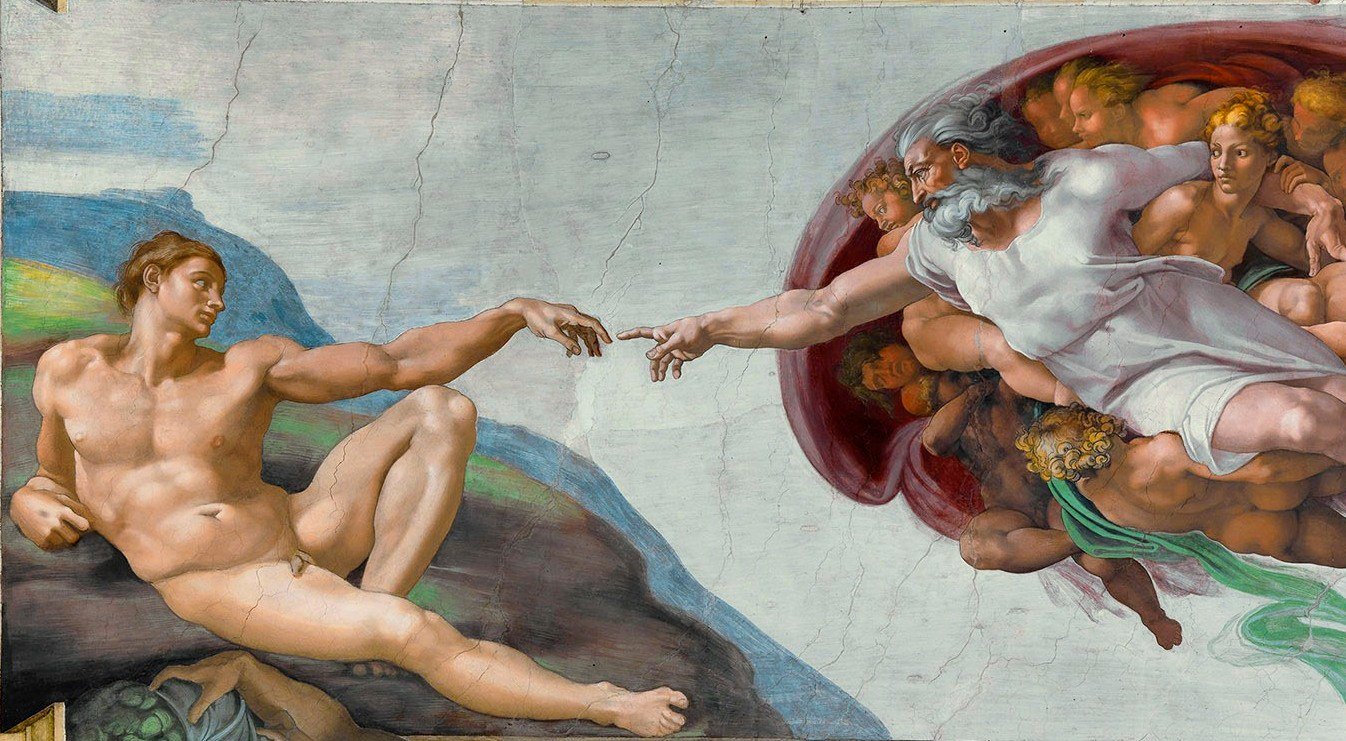
"The [mystical] visions are not ends in themselves but means to an ineffable religious experience that exceeds normal concepts. They will be conditioned by the particular religious tradition of the mystic. A Jewish visionary will see visions of the seven heavens because his religious imagination is stocked with these particular symbols. Buddhists see various images of Buddhas and bodhisattvas; Christians visualize the Virgin Mary [or Jesus]. It is a mistake for the visionary to see these mental apparitions as objective or as anything more than a symbol of transcendence."

What is religious experience for? Why is it a part of our human evolution and biology? The religious scholar and author of the book God: A Human History, Reza Aslan, says in the video below:

I had a conversation on Facebook the other day about original sin and its relationship to non-duality. I thought it was a great discussion, and I thought I'd share it again here.

An addition to the BHT, which is the Apostle Paul's sermon at the Areopagus, or high court at Mars Hill, about the nature of God.

Walt Whitman (1819-1892) was a noted poet, essayist, and journalist, perhaps best known for his collection of poems titled Leaves of Grass. He wrote of divine experiences on several occasions in his poems.

Sam Harris is a noted philosopher, author, and neuroscientist. He is known for often speaking quite negatively about religion, and has been called one of the "Four Horsemen" of the New Atheism, which also includes Richard Dawkins, Christopher Hitchens, and Daniel Dennett. Harris has often spoken very harshly of modern Christianity, among other religions, particularly in his books The End of Faith, and Letter to a Christian Nation. What I find fascinating is where he has spoken positively about it, and Jesus in particular. This is may be a key where I think the discussion should take place for there to be a constructive dialogue between science and religion.

Henry David Thoreau (1817-1862) is widely known as a great 19th century transcendentalist essayist, poet, philosopher, naturalist, and historian, among other things. He is most well-known for his book Walden, and his essay "Civil Disobedience." The following comes from his poem titled "Inspiration."

In 1979 she had an experience while giving a eulogy at the funeral of a friend that forever changed her life. She later called it a "near-death-like" experience, being similar to many NDEs (including one she had earlier in life), but she was not near death at all. She describes it in one place this way...