Reconstructing Joseph Smith’s “First Vision”

Mormonism traces back its history in modern times to its founding prophet, Joseph Smith Jr., and his "First Vision." Joseph was a young farmer boy who lived in western New York, born in the early nineteenth century. This was the time of what's known as the Second Great Awakening, and where Joseph lived is known as the "burned-over district." It was a time of much Protestant religious excitement, revivals, reforms, and the formation of new religious movements and denominations (which eventually included Mormonism). A Restoration Movement grew in popularity in the area, which involved ideas of "restoring" a pure, primitive, uncorrupted, and original form of Christian faith.

Reconstructing Mormonism’s “Holy Ghost”

The "Holy Ghost" is perhaps one of the most mysterious figures in Mormon theology (and perhaps more generally in Christianity). Many Mormons likely know this being of the Godhead as a "personage of spirit," which "has not a body of flesh and bones," "were it not so, the Holy Ghost could not dwell within us" (D&C 130:22). This already begins to sound quite supernatural, a ghostly person that may come and dwell within me? How are we to make sense of this?

Reconstructing Mormonism’s and Christianity’s Jesus/Christ

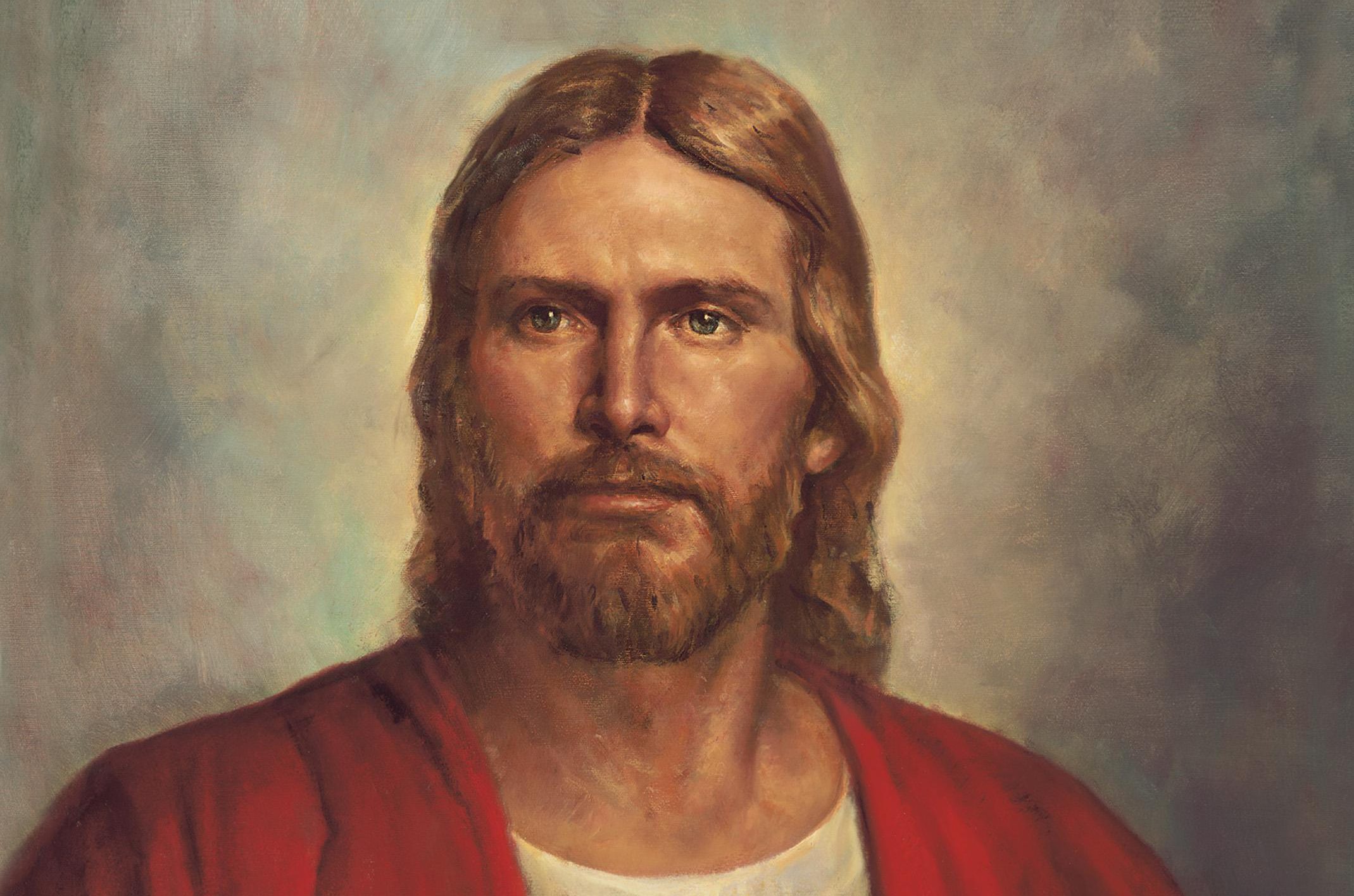
Jesus is, of course, the center of Christianity, including Mormonism. In Mormonism, he is prominently identified in the name of the largest denomination of which I was a member, The Church of Jesus Christ of Latter-day Saints. Everything revolves around Jesus.

My Thoughts on the New Age, and How It Differs from Mysticism

I am not fond of much of the New Age movement. Sometimes my thoughts about mysticism may seem like the New Age, but I think that is because the New Age has adopted a lot of mystical language and concepts, not that classical mysticism inherently belongs to the New Age. They are two different fields, which have some overlap. The New Age developed just in the 1970s. Mysticism has been around for millennia, indeed, for all of human history, in every part of the world.

Falling in Love with the Earth is Knowing God and our Self: A Commentary on Thich Nhat Hanh and Climate Change

This past week I was saddened to see the UN Intergovernmental Panel on Climate Change (IPCC) report that paints a grim picture of the current status of climate change and the future projection of this century. This report was commissioned during the 2015 Paris summit on climate change. It's a wake up call to the [...]

Is There a “Healthy” Ego?

In spirituality and mysticism we often encounter discussion about the ego, the psychological self, the "self" that we think we are. This is often referred to as a kind of illusion, something to rid ourselves of to see reality as it really is. It is called an obstruction, a veil, something which hides the Divine from us, which obscures our perception, and that it must be torn from top to bottom and done away. Sometimes mystics loudly loathe the ego, punish the ego, call for its death, its annihilation, its crucifixion, its extinguishment, extinction, falling away, passing away. This all sounds quite harsh to the "self" that we think we are, and so some spiritual teachers deny that we need to eradicate the ego, but rather transform it into something good. Which is it? Do we need to allow the ego to fall away, or transform it into a "healthy" ego? I'll share some of my thoughts about that.

The Mysticism of Falling into a Black Hole

The unitive mystical experience can be compared to falling into a black hole. When compared this way, it doesn't sound like a nice experience. Likewise, for many mystics throughout history, their divine experiences weren't always a merry venture, sometimes encountering hellish realms along the way (see, for example, St. Teresa of Ávila, or St. John of the Cross's Dark Night of the Soul).